header
News
RISE Anchor Program Receives Top Tier in First-Year Evaluation
DATE 2026-09-14 13:44:44.0
- WRITER 학무부총장실
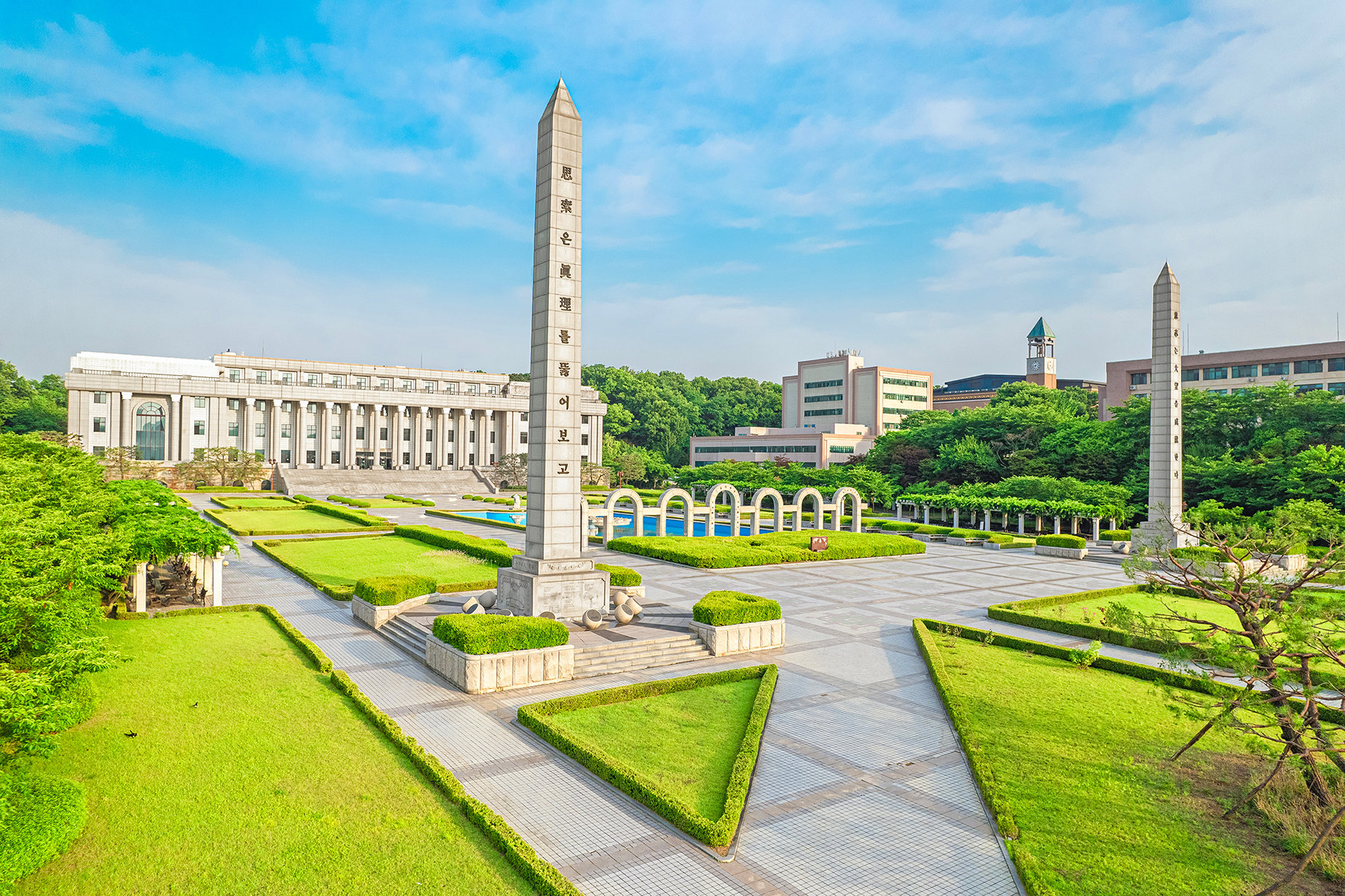
Kyung Hee University’s dual-campus Anchor Project Groups secured top-tier marks in the first-year evaluation of the Regional Innovation System & Education (RISE) project, earning an "Outstanding" rating from Gyeonggi Province and an "Excellent" rating from the Seoul Metropolitan Government.
Dual-Campus Anchor Programs secure top ratings from Gyeonggi Province and Seoul Metropolitan Government in the 2025 RISE Annual Evaluation
Validates Kyung Hee’s leadership in regional innovation while establishing a robust springboard for Year Two expansion
Kyung Hee University’s dual-campus Anchor Project Groups have achieved stellar ratings in the first-year annual evaluation of the Regional Innovation System & Education (RISE) initiative for the 2025 academic year, securing an “Outstanding” grade from Gyeonggi Province and an "Excellent" grade from the Seoul Metropolitan Government. This achievement firmly cements Kyung Hee's stature as a vanguard of regional innovation. The evaluation was conducted to comprehensively assess performance milestone delivery, implementation fidelity, and the operational integrity of participating anchor institutions, while fostering structural enhancements across institutional project frameworks.
Recognition for Balanced Industry Alignment and a Robust Entrepreneurial Ecosystem
The Gyeonggi Anchor Program earned high commendations for establishing a well-balanced operational framework meticulously tailored to Gyeonggi Province’s Future Growth Industries (G7) and Foundational Regional Industries (GX). Spanning 12 targeted modular projects, the initiative spearheaded local talent cultivation and industrial modernization across G7 frontiers—including semiconductors, AI, big data, advanced mobility, biotechnology, renewable energy, quantum technology, and digital transformation—as well as GX sectors ranging from materials, parts, and equipment (MPE) and advanced manufacturing to creative content, agrifood, smart farming, design, arts and culture, healthcare and welfare, and services. The program also prioritized hands-on workforce readiness, bolstering students' applied competencies through a local government-industry-academia co-growth educational platform, standard semester-based field internships, and global practicum placements.A standout achievement took place in March of last year with the signing of a strategic partnership with the semiconductor specialist Soulbrain and the subsequent launch of the Kyung Hee Pangyo VI Campus—a startup acceleration hub leveraging Pangyo’s tech infrastructure. Operating on an integrated circular incubation pipeline spanning education, incubation, mentoring, networking, and advanced equipment access, the campus has forged an open, region-wide innovation ecosystem in close synergy with local agencies
Substantial cooperative foundations were also laid across the local government-industry-academia alliance. The program firmly solidified collaborative ties by launching the GAIA-LINK Consultative Committee in the AI and big data sectors and establishing the Semiconductor Alliance Steering Committee. Furthermore, multi-tiered collaborative infrastructures were deployed, highlighted by the regional innovation and co-growth platform, RISE-O:NE.
Strategic Alignment with Long-Term Institutional Blueprints and Global Connectivity Recognized
In the Seoul Anchor Program, strong strategic alignment with the university’s mid- to long-term regional cooperation master plan earned standout marks. Operating under the mission of "Building a Tripartite Cooperation Ecosystem by Securing Global Competitiveness and Serving the Community," the Seoul Anchor Project Group executed an actionable roadmap to channel the university’s premier research and academic capabilities into local industrial innovation and civic well-being. This mission directly mirrors the vision of the Seoul Metropolitan Government's RISE Master Plan: "Seoul, a Global Future-Innovation Growth City Powered by Universities.”To advance and commercialize high-potential, university-held intellectual property, the program spearheaded value-creation initiatives such as KHU IP Value-Up, the TRL (Technology Readiness Level) Upgrade Program, and Joint Industry-Academia-Research Technology Development Projects, actively translating cutting-edge research into high-value commercial assets. Global industry-academia competencies were likewise reinforced: practical execution capabilities were cultivated through the S-Cluster-Linked Curriculum, the Standard Field Internship Semester System, and the Capstone Design Literacy (LIG) Program, while collaborative seminars and community-engaged projects significantly broadened the foundational reach of civic-academic-industrial partnerships.
Elevating global competencies was another prominent breakthrough. Student ambassador delegations actively participated in premier international expositions hosted by the Seoul Metropolitan Government—including Try Everything 2025 and Smart Life Week 2025 (SLW 2025)—expanding their global fluency and cultivating cross-border networks. In parallel, to reinforce the industrial sustainability of Dongdaemun-gu’s historic garment and sewing manufacturing cluster, the university established the Kyung Hee Fashion Creator Group. This program presented an innovative co-prosperity model by infusing students’ creative sensibilities and youthful vision into a legacy sewing sector navigating severe demographic aging.
From Talent Cultivation to Tech Commercialization: Powering Regional Impact Through Academic Innovation
For Year Two, the Global Campus Anchor Project Group has unveiled five core flagship initiatives under the vision of "Co-Growing Regional Ecosystems, Co-Leaping into Global Prominence": KnM+EDU, GAIA-LINK, the RISE-O:NE Platform, the Pangyo VI Campus, and the AI Academy. In talent cultivation, the group will deploy G7-tailored convergence curricula calibrated for the AI Transformation (AX) era, anchoring a student-led educational paradigm driven by Capstone Design and Project-Based Learning (PBL). On the R&D and technological innovation front, it will spearhead demand-driven R&D initiatives for G7 industry partners. To elevate regional foundational industries, the group will channel breakthroughs into local communities through customized tech development, rapid prototyping, and technology transfers tailored to GX needs. Within the entrepreneurial sphere, it will build a springboard for global venture scalability through stage-tailored support (ideation, early-stage, and scale-up) alongside the Kyung Hee Pangyo VI Campus Incubation & Investment Fund.Simultaneously, the Seoul Campus Anchor Project Group will concentrate Year Two efforts on launching new tripartite joint R&D initiatives and accelerating tangible technology commercialization. Building on the core intellectual assets and intelligent infrastructure established in Year One, Year Two will secure collaborative R&D pipelines designed to solve immediate technical bottlenecks for regional enterprises and scale them into large-scale national projects. By coupling the KLIC (K-Lab Intense Care) incubation framework with global technology marketing, the group will deliver end-to-end lifecycle support to translate laboratory discoveries into high-impact licensing agreements, patent portfolios, and commercialized intellectual property. Furthermore, sustained participation in premier international expos—including the Seoul Metropolitan Government’s Smart Life Week 2026 (SLW 2026)—will expand global cooperative networks, while dedicated educational and community-action tracks will deepen student engagement across local civic sectors.