header
News
Seeking Solutions for Sustainable Food Packaging
DATE 2026-08-18 09:53:31.0
- WRITER 학무부총장실
Interview with Professor Jun Tae Kim of the Department of Food and Nutrition, selected as a 2025 Kyung Hee Fellow (Research)
Research focuses on active and intelligent packaging to enhance food freshness
Focus placed on developing bioplastic-based packaging materials that integrate safety and sustainability
Editor’s Note: Every year, Kyung Hee University selects faculty members who have demonstrated outstanding achievements in education and research as "Kyung Hee Fellows (Research/Education)." The professors designated as 2025 Kyung Hee Fellows (Research) have delivered innovative research results across their respective fields. Among them, Professor Jun Tae Kim of the Department of Food and Nutrition has led the Food Processing and Packaging Laboratory, developing next-generation packaging materials that integrate nanotechnology and biomaterials. We spoke with Professor Kim about his research milestones and future plans.
Professor Kim credited his selection as a Kyung Hee Fellow to the collaborative efforts of his laboratory members rather than to individual achievement. “It is highly meaningful to receive recognition for our research, and I will continue to approach our work with a deep sense of responsibility,” he reflected.
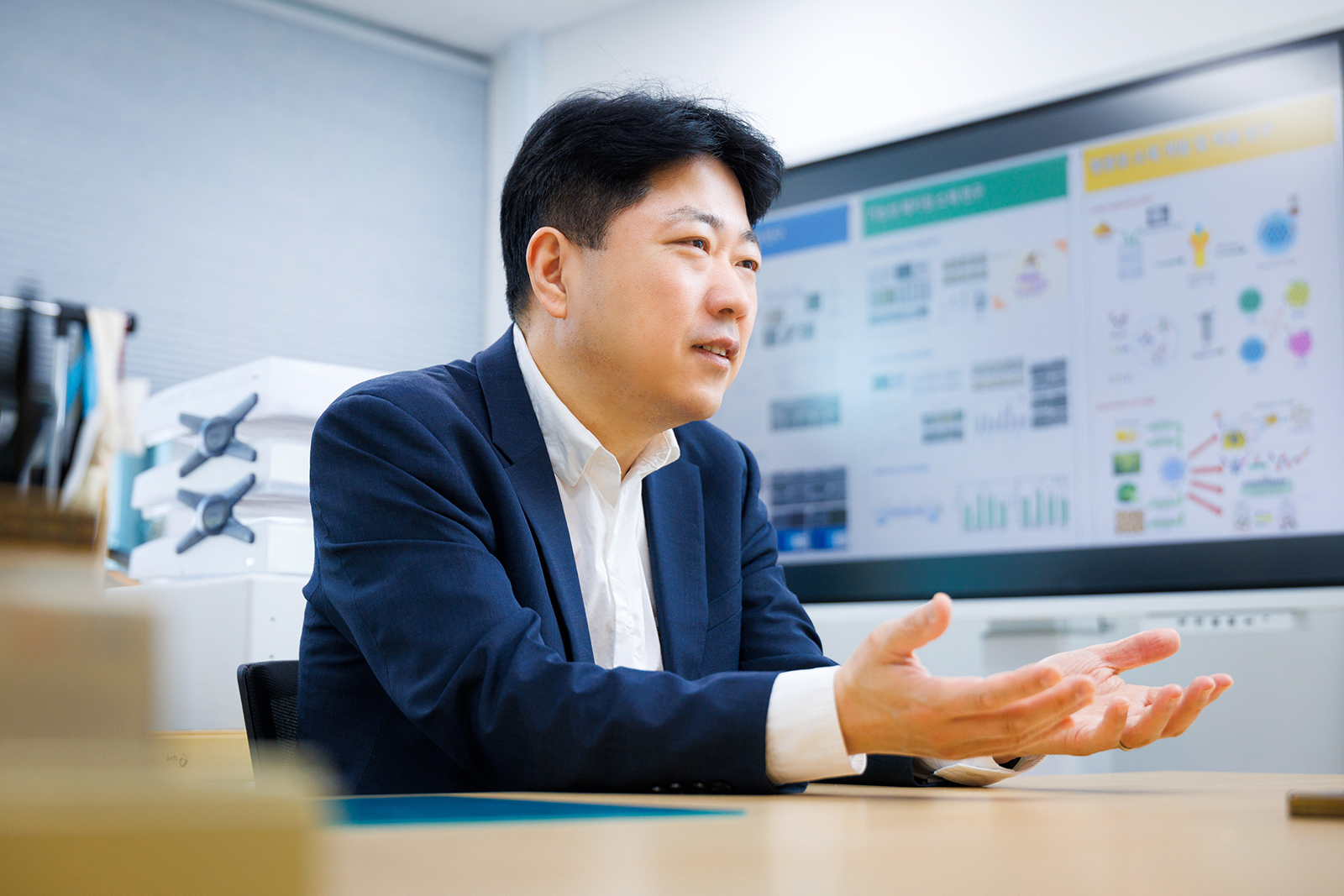
Safety remains the absolute standard of his research. “Because packaging materials come into direct contact with food, safety must be guaranteed before we consider functionality,” Professor Kim emphasized. The laboratory verifies material safety through cytotoxicity assays and migration tests. Professor Kim has consistently conducted safety evaluations for food-contact items, earning the Encouragement Award for Outstanding Performance in R&D Projects from the Ministry of Food and Drug Safety (MFDS) in 2023.
At the laboratory level, they have confirmed significant preservation effects. “We verified that the storage period was extended in seafood like shrimp, and overall, our materials prolonged freshness by 30% to 40%,” Professor Kim stated. This is the result of combined properties working in unison—including antioxidants, antimicrobials, gas absorbers, and UV blockers—to inhibit food oxidation and microbial growth.
Professor Kim’s research focuses on reducing food waste during distribution and storage, and developing packaging materials that can replace petroleum-based plastics. Because different foods spoil for different reasons, the required packaging functions vary. Antibacterial functions are critical for foods prone to microbial growth, while antioxidant functions are vital for items that oxidize rapidly. While tailoring functions to address these specific needs, the laboratory is also researching highly versatile packaging materials that can be easily adopted by industry.
Professor Kim views collaboration with his laboratory members as the cornerstone of his work, comparing the research process to an "ensemble" rather than a "solo performance." Based on flat, horizontal communication, he conducts regular lab meetings to share progress and fosters an environment where all members can freely propose ideas.
Postdoctoral researchers recruited from abroad also participate in the laboratory. By bringing materials science and chemistry researchers into a laboratory traditionally focused on food science, the team has expanded its research boundaries. The laboratory collaborates with the materials science specialist on metal-organic framework (MOF) materials, and with the chemist on fluorescent sensor-based intelligent packaging. “Integrating perspectives from different disciplines has helped us introduce novel materials and methodologies,” Professor Kim explained.
Commercialization remains a key challenge. “While active packaging is closer to industrial application than intelligent packaging, we must still resolve issues related to unit cost, manufacturing stability, and safety verification,” Professor Kim noted. The laboratory is focusing on finding materials and manufacturing processes that can overcome these limitations.
“I want to focus on the fundamental, essential challenges in the field of food packaging,” Professor Kim said, adding that research always begins with the question "why." He places great emphasis on thorough review, iterative verification, and strict research ethics. For him, selection as a Kyung Hee Fellow is both a powerful motivator to continue his research and a responsibility to deliver even better results.
Research focuses on active and intelligent packaging to enhance food freshness
Focus placed on developing bioplastic-based packaging materials that integrate safety and sustainability
Editor’s Note: Every year, Kyung Hee University selects faculty members who have demonstrated outstanding achievements in education and research as "Kyung Hee Fellows (Research/Education)." The professors designated as 2025 Kyung Hee Fellows (Research) have delivered innovative research results across their respective fields. Among them, Professor Jun Tae Kim of the Department of Food and Nutrition has led the Food Processing and Packaging Laboratory, developing next-generation packaging materials that integrate nanotechnology and biomaterials. We spoke with Professor Kim about his research milestones and future plans.
Research Excellence Proven by Academic Milestones
Professor Jun Tae Kim conducts research on bioplastic-based, multifunctional food packaging materials. Over the past three years and four months, he has published 69 SCIE papers, with 68.4% of his 38 lead-author publications appearing in journals ranking in the top 10% of the Journal Citation Reports (JCR). In 2025, he was named to the single-year list of the World's Top 2% Scientists published by Elsevier and Stanford University. He also conducts safety evaluation research for food utensils, containers, and packaging under research commissions from the National Institute of Food and Drug Safety Evaluation, helping to establish relevant national regulatory standards.Professor Kim credited his selection as a Kyung Hee Fellow to the collaborative efforts of his laboratory members rather than to individual achievement. “It is highly meaningful to receive recognition for our research, and I will continue to approach our work with a deep sense of responsibility,” he reflected.
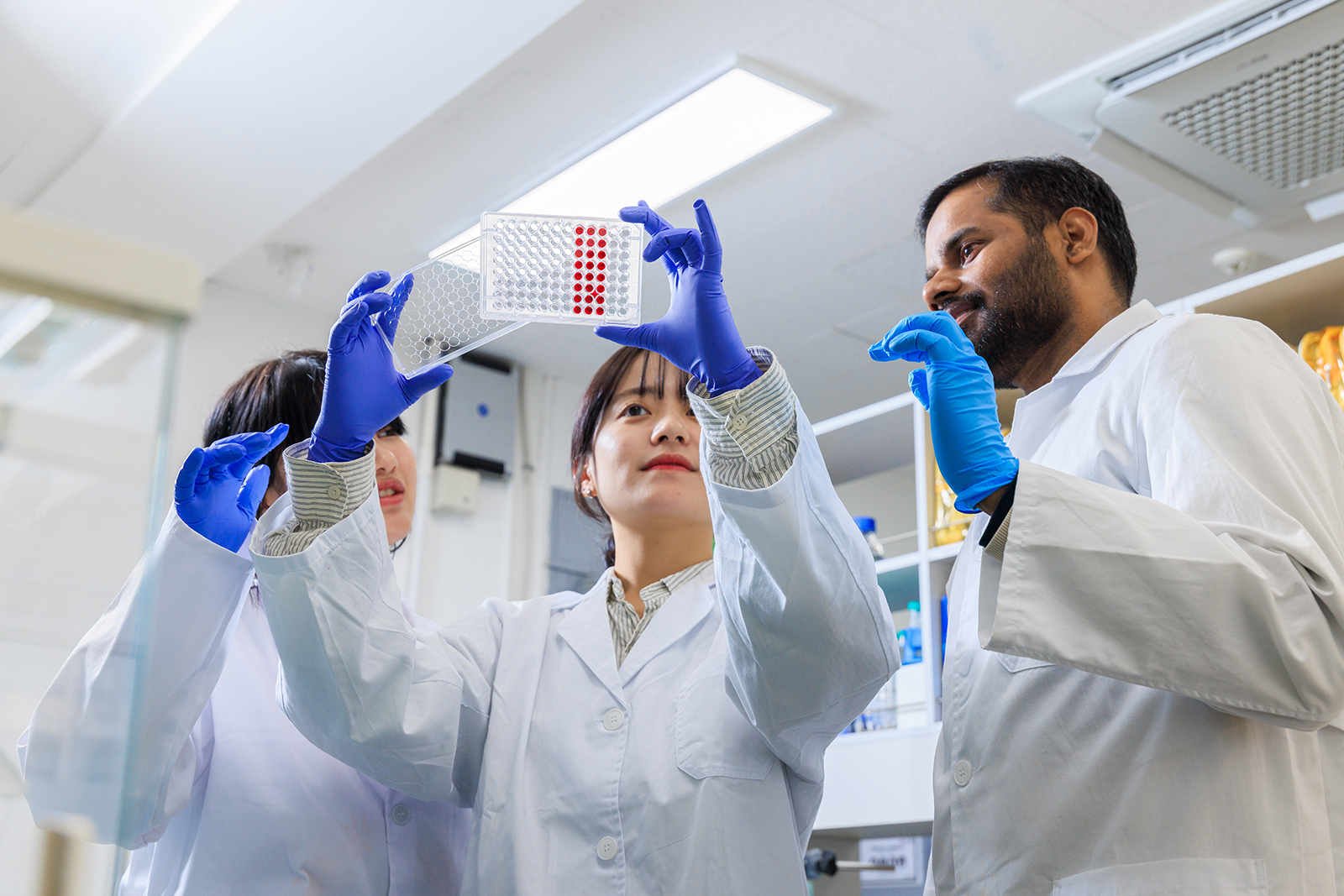
Professor Kim and his research team at the Food Processing and Packaging Laboratory work together on multifunctional food packaging materials.
Research to Enhance Freshness and Monitor Quality
His research on multifunctional food packaging proceeds along three main paths. The first is active packaging technology, which integrates antibacterial, antiviral, and antioxidant properties with UV blocking and gas absorption capabilities. This suppresses food oxidation and microbial growth, preserving freshness and significantly extending shelf life. The second is intelligent packaging technology, which utilizes changes in color or fluorescence to allow customers to visually inspect food freshness. The third path focuses on developing eco-friendly packaging materials using bioplastics to enhance sustainability.Safety remains the absolute standard of his research. “Because packaging materials come into direct contact with food, safety must be guaranteed before we consider functionality,” Professor Kim emphasized. The laboratory verifies material safety through cytotoxicity assays and migration tests. Professor Kim has consistently conducted safety evaluations for food-contact items, earning the Encouragement Award for Outstanding Performance in R&D Projects from the Ministry of Food and Drug Safety (MFDS) in 2023.
At the laboratory level, they have confirmed significant preservation effects. “We verified that the storage period was extended in seafood like shrimp, and overall, our materials prolonged freshness by 30% to 40%,” Professor Kim stated. This is the result of combined properties working in unison—including antioxidants, antimicrobials, gas absorbers, and UV blockers—to inhibit food oxidation and microbial growth.
Professor Kim’s research focuses on reducing food waste during distribution and storage, and developing packaging materials that can replace petroleum-based plastics. Because different foods spoil for different reasons, the required packaging functions vary. Antibacterial functions are critical for foods prone to microbial growth, while antioxidant functions are vital for items that oxidize rapidly. While tailoring functions to address these specific needs, the laboratory is also researching highly versatile packaging materials that can be easily adopted by industry.
Postdoctoral researchers Dr. Zohreh Riahi (Materials Science Engineering) and Dr. Thangarasu Sasikumar (Chemistry) bring fresh perspectives to expand the scope of active and intelligent packaging research.
Expanding Research Scope Through Institutional Support and Collaboration
Institutional support from the university played a key role in helping Professor Kim establish his food packaging research. “We were able to build our foundation and continue our research thanks to support from the Office of Research and University-Industry Cooperation,” he shared. Through the "Future-Leading Young Researcher" support program, he received 80 million won in initial funding over two years, along with comprehensive administrative assistance in project application, agreements, budget review, and fund execution. Support for purchasing research materials and hosting academic conferences through research administrative staff programs also helped sustain their work.Professor Kim views collaboration with his laboratory members as the cornerstone of his work, comparing the research process to an "ensemble" rather than a "solo performance." Based on flat, horizontal communication, he conducts regular lab meetings to share progress and fosters an environment where all members can freely propose ideas.
Postdoctoral researchers recruited from abroad also participate in the laboratory. By bringing materials science and chemistry researchers into a laboratory traditionally focused on food science, the team has expanded its research boundaries. The laboratory collaborates with the materials science specialist on metal-organic framework (MOF) materials, and with the chemist on fluorescent sensor-based intelligent packaging. “Integrating perspectives from different disciplines has helped us introduce novel materials and methodologies,” Professor Kim explained.
Next Steps: Commercialization and Carbon-Neutral Material Development
Moving forward, Professor Kim plans to focus on two major areas. The first is scaling up functional packaging materials proven in the lab to technologies that can be implemented in actual industrial settings. The second is intensifying research into carbon-neutral materials that account for the entire life cycle of packaging, from production to disposal.Commercialization remains a key challenge. “While active packaging is closer to industrial application than intelligent packaging, we must still resolve issues related to unit cost, manufacturing stability, and safety verification,” Professor Kim noted. The laboratory is focusing on finding materials and manufacturing processes that can overcome these limitations.
“I want to focus on the fundamental, essential challenges in the field of food packaging,” Professor Kim said, adding that research always begins with the question "why." He places great emphasis on thorough review, iterative verification, and strict research ethics. For him, selection as a Kyung Hee Fellow is both a powerful motivator to continue his research and a responsibility to deliver even better results.