header
News
Development of High-Performance Superconductors with Hydrogen Storage Capabilities
DATE 2026-04-27 11:08:18.0
- WRITER 학무부총장실
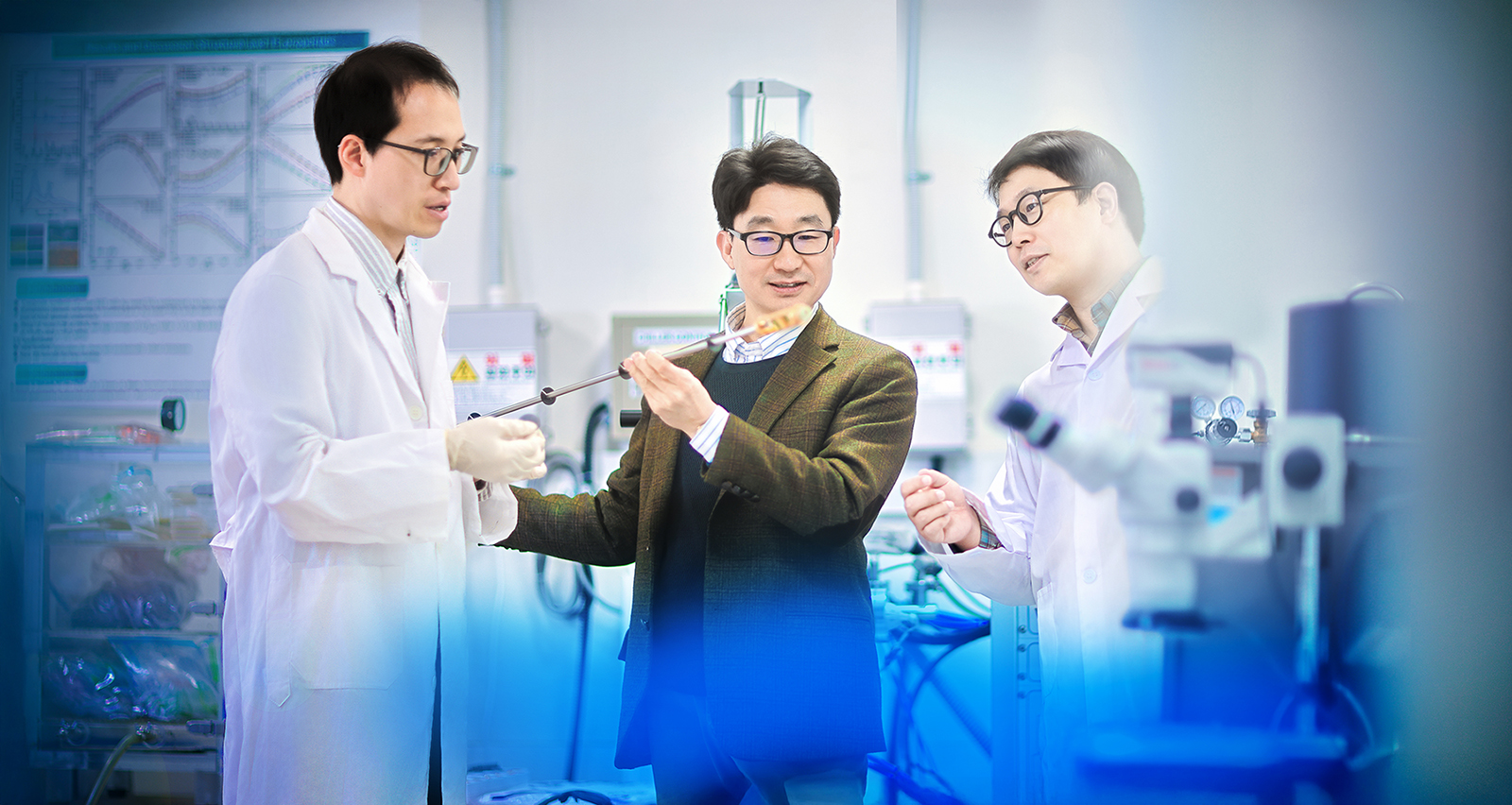
Professor Jong-Soo Rhyee’s research team in the Department of Applied Physics has developed an ultra-high-strength metal superconductor that simultaneously integrates hydrogen storage capabilities and superconducting properties.
Ensuring High Mechanical Strength and Durability
Convergence of Hydrogen-Based Energy Systems and Superconducting Technology
Professor Jong-Soo Rhyee’s research team in the Department of Applied Physics (Lead authors: Dr. Rahmatul Hidayati and Research Professor Jin Hee Kim) has developed an ultra-high-strength metal superconductor that simultaneously integrates hydrogen storage capabilities and superconducting properties. This achievement, which presents a next-generation superconducting material technology tailored for the hydrogen economy era, was published in the international materials science journal Advanced Functional Materials (Impact Factor 19.0).
Superconductors are materials with zero electrical resistance. Once a current begins to flow, it continues indefinitely, making the superconductor a “dream material” capable of storing electrical energy in the form of magnetic fields. Due to these unique properties, superconductors are utilized as core materials across the future energy, medical, and transportation industries—ranging from lossless power transmission and superconducting magnets to Superconducting Magnetic Energy Storage (SMES), maglev trains, MRIs, and nuclear fusion devices. However, existing metal-based superconductors face limitations in expanding their applications due to the challenges of maintaining cryogenic environments and concerns over material durability.
To overcome these limitations, Professor Rhyee’s team developed a new metal superconductor by applying the concept of high-entropy alloys (HEAs). High-entropy alloys consist of multiple metallic elements mixed uniformly, resulting in a structure that is both simple and exceptionally strong. The newly developed material demonstrated approximately six times the strength of standard stainless steel and proved highly resistant to corrosion or fracture, even in hydrogen-rich environments.
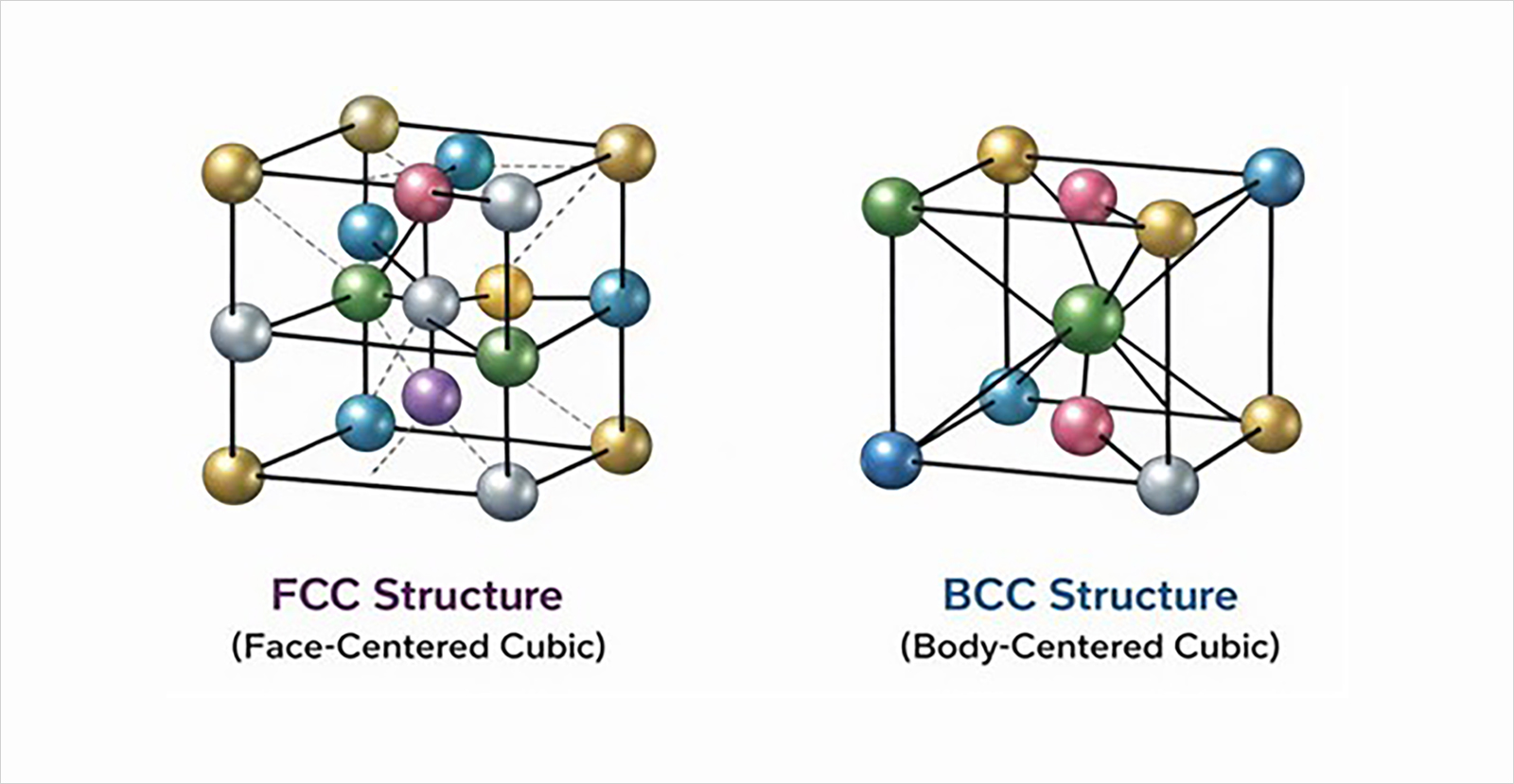
Figure Description: Crystal structure of high-entropy alloys and a conceptual diagram of hydrogen-storing high-entropy alloy superconductivity.
The most significant feature of this research is the integration of a new role—hydrogen storage—into superconducting functionality.
The newly developed superconductor can store hydrogen at a level of approximately 3.8 wt% relative to its mass. This represents the world’s highest value for a metal hydrogen-storage material, excluding hydrides.
While common metals typically suffer from structural weakening upon absorbing hydrogen, this material demonstrates high technical maturity by enabling hydrogen storage while maintaining both mechanical strength and hydrogen embrittlement resistance (the property of not corroding or weakening in a hydrogen-rich atmosphere).
The material’s superconducting properties have also been enhanced. Its superconducting critical current—the maximum current a superconductor can carry—reaches an exceptionally high value of approximately 300kA/cm². Based on these multifunctional characteristics—high strength, hydrogen resistance, and high critical current—this superconductor is expected to have a direct impact on next-generation superconducting energy storage systems, superconducting magnets, and hydrogen-based energy infrastructure.
Professor Rhyee remarked, “By combining the energy transfer capabilities of superconductors with hydrogen storage and refrigerant functions, we have presented the potential for a new superconducting material tailored for the hydrogen economy era.” He added, “We expect this to expand into various applications where hydrogen-based energy systems and superconducting technology converge.” This research was supported by the Alchemist Project of the Ministry of Trade, Industry and Energy.
The research team plans to work toward integrating the developed superconductor with hydrogen-based energy systems.